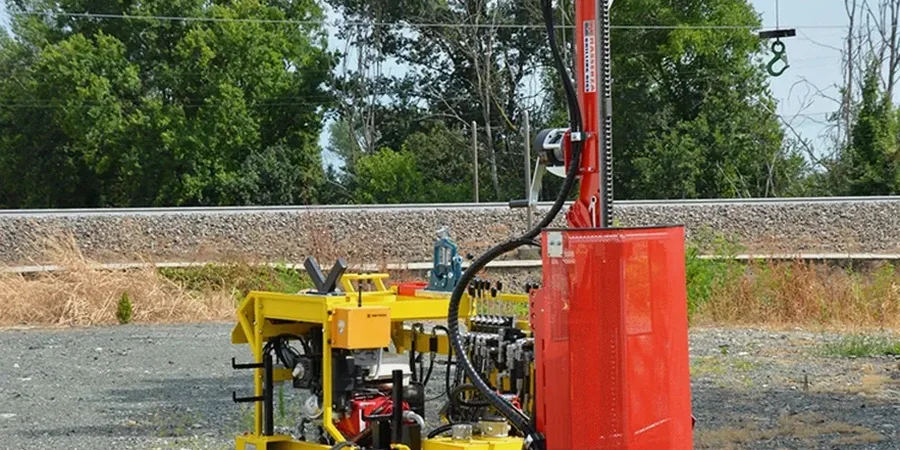
Spend enough time on Wellington sites and you quickly learn that what’s on the surface tells you almost nothing about what’s underneath. That gentle slope in Karori might sit on weathered greywacke, while a flat section in Te Aro hides metres of reclamation fill over harbour mud. The Standard Penetration Test (SPT) is still the most practical way to cut through the guesswork — you get a measured, repeatable profile of soil resistance every 1.5 metres, right where the future footing or pile is going to work. We run SPT testing across the Wellington region, from Johnsonville to Miramar, always referencing the current NZGS guidelines so the N-values you receive are consistent and defensible. It’s the kind of data geotechnical engineers can actually use without second-guessing the field method. When the bore log lands on your desk, you’ll also see whether we paired the SPT with a CPT test to refine the stratigraphy or a test pit for visual confirmation in the top few metres — whichever makes sense for the ground conditions on your Wellington site.
An SPT in Wellington isn’t just a number on a log — it’s the difference between a foundation that holds through the next big shake and one that doesn’t.
Local ground factors
Wellington sits astride several active fault traces, and much of the CBD is built on reclaimed land that amplifies seismic shaking. The 2016 Kaikōura earthquake reminded everyone that loose Holocene sands and interbedded silts can lose strength fast — SPT blow counts below 5 or 6 in the upper 10 metres are a red flag for liquefaction potential. Our drillers watch for that signature in real time: a sudden drop in resistance, a change in the sound of the hammer, a sample that barely stays in the spoon. When the SPT indicates liquefiable layers, the design response typically shifts from shallow footings to ground improvement or piled foundations, and the cost implications are significant. That’s why we’re blunt in our reporting — a soft layer isn’t a problem if you know it’s there; it’s a problem when it’s discovered during excavation. Wellington’s geology doesn’t reward optimism, so we work with the NZGS liquefaction triggering curves and don’t sugar-coat the N-values that put a site into a higher seismic category.
Common questions
How much does SPT testing cost for a standard Wellington residential section?
For a typical single-dwelling site in Wellington, SPT testing usually falls in the range of NZ$880 to NZ$1,410, depending on access, depth required, and whether we’re drilling through fill or straight into natural ground. Tighter CBD access or steep Wellington hillside sites may push toward the upper end because of setup time and equipment logistics.
At what depth intervals do you record SPT blows, and what depth do you typically reach in Wellington soils?
We record blows for three consecutive 150 mm increments — the N-value is the sum of the final two — at 1.5 m intervals or at every change of stratum. In Wellington’s hill suburbs we often reach practical refusal on greywacke between 3 and 8 metres. On the alluvial flats of the Hutt, boreholes may extend to 15 or 20 metres where softer materials persist.
How soon after drilling can I expect the SPT report with final N-values?
Field logs are available the same day. The final signed report, incorporating sample descriptions, N-values corrected for hammer energy, and correlation charts against NZS 3404 / NZGS guidelines, is typically issued within three to five working days. Rush turnaround is available when the contractor is waiting on foundation design.