← Home · Foundations

Raft and Mat Foundation Design in Wellington

Together, we solve the challenges of tomorrow.

LEARN MORE →

Wellington's urban core sits heavily on reclaimed land, notably the CentrePort and Te Aro areas, where saturated hydraulic fill overlies softer marine sediments. A 2016 Kaikoura earthquake report by the NZGS confirmed widespread liquefaction-induced settlement across these zones, exceeding 200mm in some wharf locations. Designing a mat foundation here demands more than just a structural slab. It requires full integration of bearing capacity checks, differential settlement analysis, and seismic demand verification under NZS 4203. The liquefaction assessment becomes a non-negotiable prerequisite. In the Hutt Valley, where deep alluvial gravels meet the Wellington Fault's influence, the approach shifts toward bridging isolated soft pockets with a rigid raft.

A properly designed raft in Wellington's reclamation zones converts differential settlement into controlled tilt, protecting the superstructure when the ground inevitably moves.

Our approach and scope

A recent mixed-use project on Taranaki Street involved a twelve-storey tower on a site with 18 metres of reclamation fill over silty harbour deposits. The initial CPT test profiles revealed cyclic resistance ratios below 0.15 between 4 and 9 metres depth. That triggered a full mat foundation solution, 1.2 metres thick with perimeter stiffening beams, designed to tolerate up to 40mm of estimated post-liquefaction differential movement. We modelled the soil-structure interaction in PLAXIS 3D, calibrating the Hardening Soil model parameters against triaxial data. The structural engineer then verified the mat's flexural capacity per NZS 3404. For sites with similar profiles but lower superstructure loads, a compensated raft can work if the stone columns treatment extends to at least the embedment depth plus twice the raft width.
Raft and Mat Foundation Design in Wellington
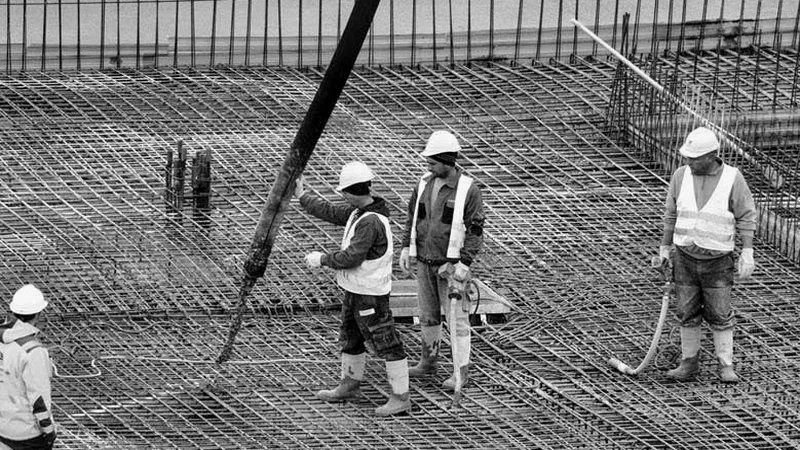
Technical reference image — Wellington

Local ground factors

The most common failure we see is a structural engineer designing a mat foundation using a single, unverified bearing capacity value from a desktop report, without a site-specific seismic microzonation study. Wellington's liquefiable layers are often discontinuous. A raft that works perfectly over dense gravel in one corner can punch through a loose silt lens three metres away, inducing intolerable tilt. Another critical error is ignoring the kinematic interaction: during strong shaking, the mat's inertia and the soil's stiffness degradation combine to amplify rocking. We have reviewed designs where the specified reinforcement was 30% below what a time-history analysis on softened ground would demand. The fix always starts with thorough ground investigation and site response analysis.

Need a geotechnical assessment?

Reply within 24h.

Email: [email protected]

Typical values

ParameterTypical value
Allowable bearing pressure (ULS)150–300 kPa (improved ground)
Maximum total settlement50 mm (per NZS 4203 serviceability)
Maximum angular distortion1/500 for framed structures
Minimum raft thickness300 mm (stiffened raft)
PGA for seismic design0.40–0.60g (Wellington CBD)
Liquefaction settlement tolerance25–50 mm differential (calibrated)

Complementary services

01

Advanced Ground Investigation

We deploy CPT rigs capable of pushing through dense reclamation fill to 30 metres depth, combined with rotary-cored boreholes to sample the underlying greywacke bedrock. Site-specific shear wave velocity profiling is standard.

02

Liquefaction and Settlement Analysis

Using CPT-based liquefaction triggering procedures (Boulanger & Idriss) and calibrated empirical settlement models, we provide detailed maps of expected free-field and raft-induced settlements for the serviceability and ultimate limit states.

03

Soil-Structure Interaction Modelling

We build 3D finite element models incorporating the mat's stiffness, the superstructure's load distribution, and the subsoil's nonlinear behaviour. Output includes bending moment and shear envelopes for structural design of the raft.

Regulatory framework

NZS 3404:1997 Steel Structures (reinforcement detailing for mat foundations), NZS 4203:1992 General Structural Design and Design Loadings for Buildings (seismic actions), NZS 1170.5:2004 Structural Design Actions – Earthquake Actions, NZS 4402:1986 Methods of Testing Soils for Civil Engineering Purposes, NZGS/MBIE Module 4: Earthquake Resistant Foundation Design (2016)

Common questions

When is a raft foundation necessary instead of isolated footings in Wellington?

Rafts become necessary when the allowable bearing pressure drops below 150 kPa, when predicted differential settlement under isolated footings exceeds 1/500 angular distortion, or when liquefaction-induced settlement is expected. Most reclamation sites in the CBD meet at least one of these criteria.

What is the typical cost range for a raft foundation design package in Wellington?

A complete design package, including ground investigation supervision, liquefaction analysis, 3D modelling, and full structural design of the mat with documentation, typically ranges from NZ$1,570 to NZ$7,620 depending on the building footprint and ground complexity.

How does NZS 4203 influence the seismic design of a mat foundation?

NZS 4203 defines the seismic hazard factor Z for Wellington (Zone A, Z=0.55 historically, now superseded by NZS 1170.5 with higher PGA values). It establishes the lateral force demand the mat must transfer to the ground without exceeding its sliding or rocking capacity.

Can a raft foundation be designed on land with high liquefaction potential?

Yes, but only with careful treatment. The raft is typically combined with ground improvement such as stone columns or deep soil mixing beneath. The design must tolerate a calculated residual settlement, and the raft's reinforcement and thickness must accommodate the post-liquefaction soil stiffness reduction.

What geotechnical parameters are critical for Wellington raft design?

The undrained shear strength of cohesive layers, the cyclic resistance ratio of liquefiable layers, the constrained modulus for settlement calculation, and the site's small-strain shear wave velocity profile are all essential inputs for a reliable Wellington raft foundation design.
Location and service area

We serve projects in Wellington and surrounding areas.

View larger map