← Home · Roadway

Flexible Pavement Design for Wellington’s Seismic Terrain

Together, we solve the challenges of tomorrow.

LEARN MORE →

Wellington sits squarely on the active Australian-Pacific plate boundary, where weathered greywacke and wind-blown loess dominate the near-surface geology. The 2016 Kaikōura earthquake reminded everyone how quickly ground conditions shift here. For any road or carpark, the subgrade needs more than just a standard CBR check. Our team combines local drill logs with the NZGS guidelines to model resilient modulus under repeated loading. We often pair the pavement design with a CBR laboratory test to validate the soaked strength of the natural subgrade — critical when the water table sits less than 2 m below formation level in suburbs like Kilbirnie.

Good pavement design in Wellington starts 300 mm under the finished surface and ends with a drained subgrade.

Our approach and scope

We run a mobile gyratory compactor and a large-scale cyclic triaxial cell in our Lower Hutt lab. This setup simulates the actual stress path that traffic applies to unbound granular layers. The NZTA M/4 specification requires strict control on aggregate crushing resistance and plasticity index. Our design process layers this data into a mechanistic-empirical model: we calculate vertical compressive strain at the top of the subgrade, then iterate layer thicknesses until we meet the performance criteria. A single axle pass in the model replicates what a loaded truck does to a thin asphalt surfacing on a wet July morning. The output is a buildable cross-section that avoids shear failure in the basecourse.
Flexible Pavement Design for Wellington’s Seismic Terrain
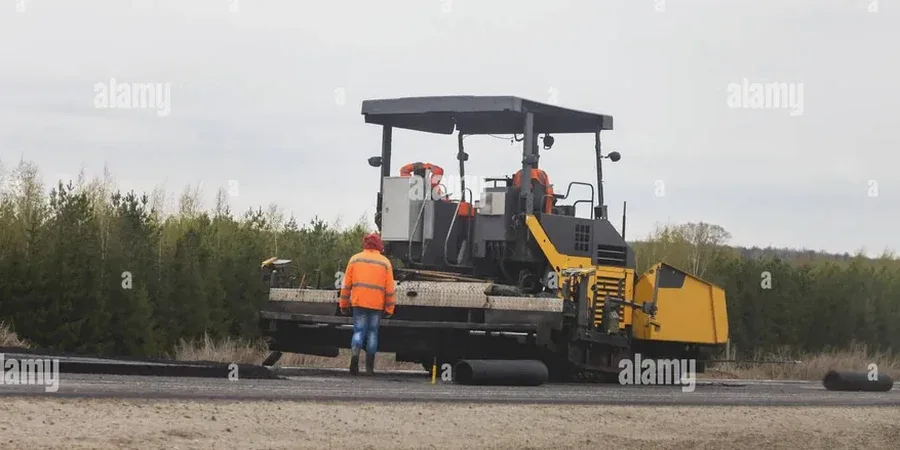
Technical reference image — Wellington

Local ground factors

A common issue we spot in older Wellington subdivisions is the presence of uncompacted fill over buried stream channels. The pavement looks fine for two years, then longitudinal cracks appear after a wet winter. Water infiltrates through the cracks, saturates the basecourse, and the structural capacity drops fast. Our investigation includes a resistivity survey or a few targeted test pits to locate these soft zones before the design stage. Another risk is using marginal aggregate with poor crushing resistance — it breaks down under traffic and loses drainage capacity. We specify a minimum wet/dry strength ratio and test every source before it goes into the pavement model.

Need a geotechnical assessment?

Reply within 24h.

Email: [email protected]

Typical values

ParameterTypical value
Design traffic (ESA)10⁴ – 10⁸ equivalent standard axles
Subgrade CBR targetMinimum 5% soaked (NZ conditions)
Granular basecourse specTNZ M/4 AP40 or AP20
Asphalt modulus range2500 – 4500 MPa at 25°C
Poisson’s ratio (unbound)0.35 typical
Drainage coefficient0.8 – 1.0 per Austroads
Reliability factor90% for urban arterials

Complementary services

01

Mechanistic-Empirical Design Report

A complete pavement design package including subgrade evaluation, traffic loading forecast, layer thickness optimisation, and a construction specification aligned with NZS 4404. We deliver the report with CAD cross-sections ready for consent submission.

02

Construction QA and Field Testing

On-site nuclear density testing, proof rolling supervision, and Benkelman beam deflection measurements during construction. We verify that each lift of fill or aggregate meets the compaction target before the next layer goes down.

Regulatory framework

NZS 4404:2010 – Land development and subdivision infrastructure, NZTA M/4:2020 – Specification for basecourse aggregate, Austroads Guide to Pavement Technology Part 2: Pavement Structural Design

Common questions

What is the typical cost for a flexible pavement design in Wellington?

A complete pavement design for a typical residential subdivision or commercial lot in Wellington ranges from NZ$2,630 to NZ$7,460, depending on the number of boreholes, traffic analysis complexity and the layers modelled.

Which subgrade strength parameter do you use for the design?

We rely on the soaked California Bearing Ratio (CBR) as the primary input. For more critical projects, we also run repeated load triaxial tests to derive the resilient modulus, following the Austroads protocol for unbound granular materials.

How do you account for Wellington’s earthquake risk in pavement design?

The main concern is subgrade liquefaction and lateral spreading, which can destroy a pavement structure regardless of its thickness. We integrate the findings from a site-specific liquefaction assessment and, where necessary, recommend ground improvement before placing the pavement layers.

What is the minimum asphalt thickness you recommend?

For light traffic, a 30 mm asphaltic concrete surfacing over 150 mm of basecourse can work. With heavier traffic, we typically specify 40–50 mm of dense-graded asphalt. The final number comes from the strain calculation in the mechanistic model.
Location and service area

We serve projects in Wellington and surrounding areas.

View larger map