← Home · Laboratory

Atterberg Limits Testing for Wellington Soils

Together, we solve the challenges of tomorrow.

LEARN MORE →

We see it constantly: a firm designs footings based on assumed clay behaviour, only to have the consent authority request Atterberg limits data mid-project, delaying the programme by weeks. Wellington's geology doesn't forgive assumptions. The city sits across greywacke bedrock, weathered zones, and pockets of alluvial silts that shift dramatically over short distances. A plasticity index that looks moderate on one side of Karori can swing high in a neighbouring terrace deposit. Getting accurate Atterberg limits isn't a checkbox exercise; it's the difference between a foundation that accommodates seasonal moisture change and one that cracks within the first three years. We run the full suite—liquid limit, plastic limit, and plasticity index—on samples prepped and tested the same day they arrive. No storage artefacts. No re-dried material. When you're working on Wellington's wind-scoured slopes, where clay reactivity can vary by 15% across a single cut face, that discipline matters. The grain-size analysis often runs alongside our Atterberg programme to establish the full fines fraction context, and we tie results back to the NZGS soil classification framework used by WCC consent engineers.

A plasticity index shift of just 12% can change a Wellington clay from low-expansion to high-expansion—and completely alter the required foundation depth.

Our approach and scope

The New Zealand Geotechnical Society guidelines and NZS 4402 methods provide the backbone, but applying them in Wellington requires more than lab protocol. The city's weather patterns—with 1200mm of annual rainfall and a drying nor'wester that can pull 40% moisture from exposed clays in days—mean that soil consistency boundaries shift seasonally. We sample and test with that volatility in mind. Our procedure follows the Casagrande cup method for liquid limit and the 3mm thread-rolling technique for plastic limit, both executed by technicians who understand how a Wellington siltstone-derived clay behaves differently from a volcanic tephra clay sourced from the harbour basin. We report the Atterberg limits alongside natural water content so you can assess the liquidity index—a parameter that often flags potential stability issues before a slope-stability analysis even begins. For projects near the fault line, where crushed zones create silty clays with unusual plasticity characteristics, we also correlate findings with triaxial strength parameters to give you a complete picture of the material's engineering behaviour under both drained and undrained conditions.
Atterberg Limits Testing for Wellington Soils
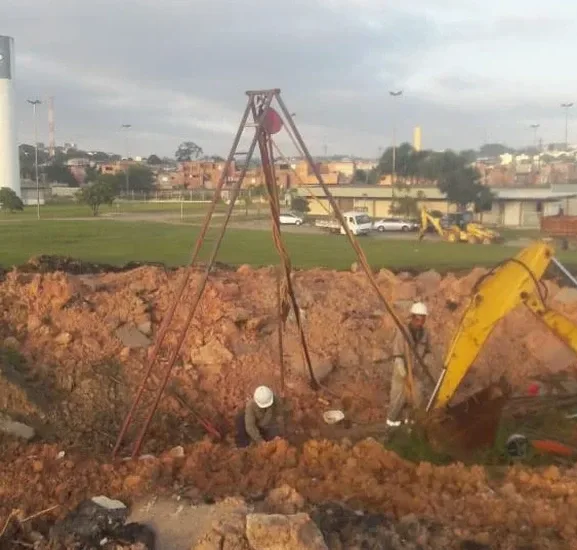
Technical reference image — Wellington

Local ground factors

A three-storey apartment block on the old Hutt Road alluvium taught us a lesson we won't forget. The geotech brief assumed moderately plastic clay across all six boreholes. We ran Atterberg limits on every metre of core and found a 2-metre lens of highly plastic silt—PI of 38—directly under the proposed pile cap at the northern end. The original design had specified a bearing pressure that that material simply couldn't sustain under wet-season conditions. Had the limits not been tested at that exact depth, differential settlement would have shown up within two winters. Wellington's coastal and valley-floor sediments carry these lenses: old swamp deposits, estuarine silts, and reworked loess that standard logging misses. Without Atterberg data at close vertical spacing, you're guessing at the most critical parameter in cohesive soil design. That's also why we pair Atterberg limits with cpt-test profiling on soft-ground sites—the sleeve friction and pore pressure data from the CPT help us identify exactly where to sample for plasticity testing, so no high-risk layer goes uncharacterised.

Need a geotechnical assessment?

Reply within 24h.

Email: [email protected]

Typical values

ParameterTypical value
Liquid Limit (LL)Determined via Casagrande cup (NZS 4402.2.2)
Plastic Limit (PL)3mm thread-rolling method, NZGS standard
Plasticity Index (PI = LL - PL)Reported to 1% resolution
Liquidity Index (LI)Calculated from natural water content
Consistency Index (CI)Inverse of LI, reported for stiff clays
Sample preparationSieved <425μm, tested same day
Classification standardNZGS Modified (fine soil groups)
Typical sample mass required200g passing No. 40 sieve

Complementary services

01

Full Atterberg Suite (LL, PL, PI)

Casagrande cup liquid limit plus plastic limit by thread-rolling. Includes liquidity index calculation when natural water content is provided. Turnaround typically 3-4 working days.

02

Moisture Condition Value (MCV) Correlation

We correlate Atterberg data with MCV for earthworks specifications, helping contractors define the workable moisture range for Wellington's silty clay fill materials.

03

Depth-Profile Atterberg Sampling

Multiple samples tested per borehole at close vertical spacing, targeted to lithological changes. Ideal for sites with interbedded alluvium or weathered greywacke horizons.

Regulatory framework

NZS 4402.2.2:1988 - Methods of testing soils for civil engineering purposes, NZGS Soil Classification Guidelines (current edition), NZS 3604:2011 - Timber-framed buildings (foundation soil categories reference)

Common questions

What do Atterberg limits testing cost in Wellington?

A standard Atterberg limits suite (liquid limit plus plastic limit) runs between NZ$110 and NZ$190 per sample, depending on whether we're also determining natural water content and calculating the liquidity index. Multi-sample programmes for depth profiling benefit from reduced per-unit pricing.

How long does it take to get Atterberg limits results?

Standard turnaround is 3 to 4 working days from sample receipt. We test samples on the day they arrive to avoid moisture loss artefacts. Urgent reports can be turned around in 48 hours when scheduled in advance.

Why does Wellington's geology make Atterberg limits particularly important?

Wellington's soils range from highly plastic harbour silts to low-plasticity weathered greywacke clays, often within the same site. The NZGS classification system relies on Atterberg limits to distinguish these groups, and foundation design parameters for expansive soil depend directly on the plasticity index. Missing a high-PI lens can lead to underspecified foundations.

What sample mass do you need for Atterberg limits testing?

We require approximately 200 grams of material passing the 425μm sieve. The sample should be sealed immediately after extrusion to preserve field moisture content, especially if you want the liquidity index reported alongside the Atterberg limits.
Location and service area

We serve projects in Wellington and surrounding areas.

View larger map