Wellington's geology changes dramatically from one suburb to the next. Over in Thorndon and along the waterfront, you're dealing with reclaimed land sitting on soft harbour sediments that can settle unevenly under load and are highly susceptible to liquefaction in a major shake. Head up into the hills of Karori or Kelburn, and it's a completely different story—residual soils and weathered greywacke rock that hold up well under compression but can slide on slickensided clay seams when the pore pressure builds after heavy rain. This contrast is exactly why a proper soil mechanics study here can't just be a generic check-the-box exercise. In our experience working across the region, understanding the stress history and shear strength of these materials, and how they respond to dynamic loading, is what separates a foundation design that performs for decades from one that becomes a liability. The CPT test can be particularly useful in the softer basin sediments to map continuous stratigraphy without disturbing the sample, giving us a clear picture of where the weak layers sit.
In Wellington's young geology, knowing the soil's stress history is often more critical than knowing its density alone.
Our approach and scope
Wellington sits at around 41.3 degrees south latitude, exposed to a wind environment that accelerates the weathering of exposed cut slopes across the city. The 2016 Kaikoura earthquake, which measured Mw 7.8, was a wake-up call for many engineers; we saw structural damage in the CBD that wasn't just about ground shaking but about the way specific soil profiles amplified seismic waves. A soil mechanics study under NZS 3404 and NZGS guidelines quantifies these effects. Our laboratory, accredited under IANZ to ISO 17025, runs the full suite of index and strength tests—from particle size distribution to direct shear and triaxial compression—to feed parameters into the ground model. We look at things like the soil's sensitivity, its consolidation state, and the cyclic stress ratio it can handle. When you're building on a hillside in Mount Victoria, you need more than a bearing capacity number; you need to know how the soil behaves when it's saturated and shaken at the same time.
Local ground factors
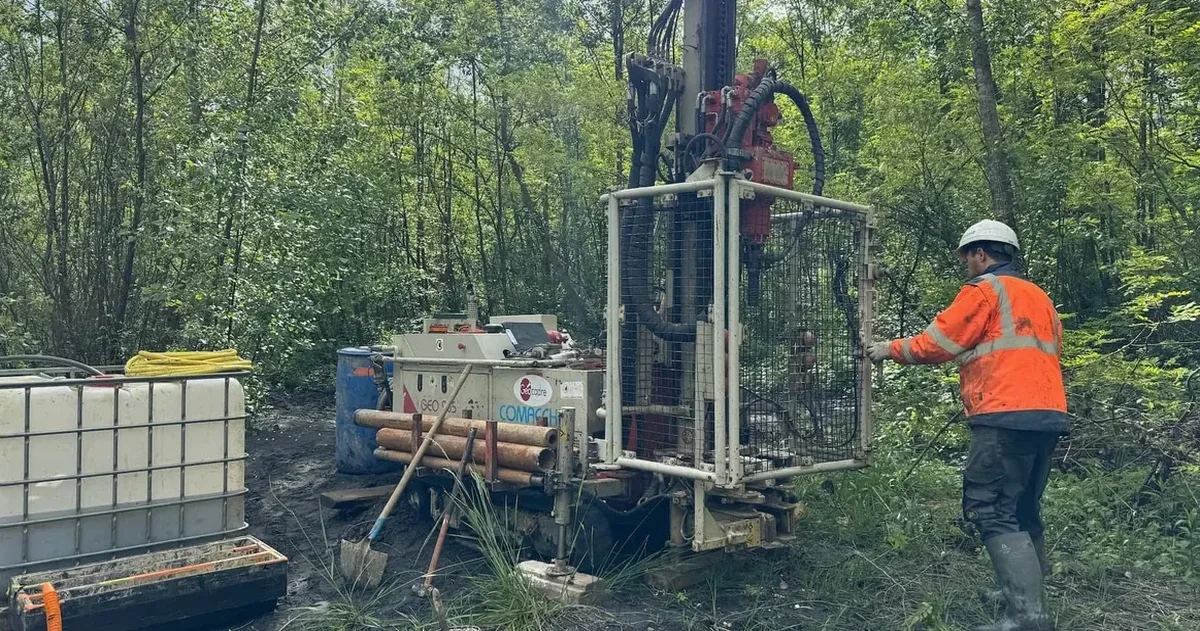
What we see again and again in Wellington is that the biggest surprises come from the fill. The city has a long history of cutting and filling to create building platforms, particularly in suburbs like Brooklyn and Wadestown, and the quality of that fill varies enormously. Sometimes it's compacted engineered fill from the 1960s, decent stuff. Other times it's uncontrolled dumping of demolition rubble and loose silts that can collapse when wetted or settle differentially under a new slab. A soil mechanics study that relies only on shallow hand augers can completely miss a deep pocket of uncontrolled fill or a buried stream channel. We routinely pair borehole drilling with laboratory consolidation tests to identify these hazards before they become foundation failures. The difference between a $2,000 repair and a $200,000 underpinning job often comes down to whether someone bothered to log the core properly and test the right samples.
Common questions
How does a soil mechanics study help with Wellington's earthquake risk?
It quantifies how the specific soils at your site will behave under cyclic loading. We determine the cyclic resistance ratio from CPT or lab tests to assess liquefaction potential in the harbour sediments, and we measure the shear modulus degradation curves to predict how much the ground motion will be amplified before it reaches your structure.
What's the typical scope of a soil mechanics study for a residential build in Wellington?
For a standard hillside residential lot, it usually involves a machine-drilled borehole to 10–15 metres, SPT sampling, and a lab program covering moisture content, Atterberg limits, particle size distribution, and direct shear or triaxial tests on selected samples. If the site is in a liquefaction-prone area, we add CPT soundings.
How much does a soil mechanics study cost in Wellington?
For a detailed geotechnical soil mechanics study covering drilling, lab testing, and an interpretive report, budgets in Wellington typically range from NZ$4,680 to NZ$9,210 depending on the number of boreholes, depth of exploration, and the complexity of the lab testing required.
How long does it take to get the lab results back?
Basic index tests (moisture content, Atterberg limits, grain size) can be turned around in 5–7 working days. Consolidation tests take 10–14 days due to the time needed for each load increment. A full triaxial suite might take 3–4 weeks from sampling to final report. We always schedule the lab work early to avoid holding up the structural design.
Do you test the greywacke rock as well as the soil?
Yes, we often encounter the transition from residual soil to weathered and then competent greywacke in Wellington boreholes. We run point load index tests on the rock core and, where needed for deep foundations socketed into rock, unconfined compressive strength tests to provide design parameters for the structural engineer.